75-Country Immigrant Visa Suspension: Latest Updates and What Applicants Should Know (2026)
Last Updated: January 14, 2026
Over the past several days, headlines and social media posts have caused widespread concern among immigrant visa applicants, particularly those pursuing employment-based visas such as EB-3. Reports of a “75-country immigrant visa ban” have understandably created fear and confusion.
This article explains what is actually happening, who is affected, who is not, and what applicants—especially EB-3 workers—should do next, based on official information from the U.S. Department of State and reliable reporting.
Overview of the Immigrant Visa Pause
The U.S. Department of State has announced a temporary suspension of immigrant visa issuance for nationals of certain countries, effective January 21, 2026.
This action is part of an ongoing public charge and financial self-sufficiency review, aimed at assessing whether additional screening measures are needed for immigrant visa applicants from designated countries.
It is critical to understand that this action affects visa issuance, not the entire immigration system.

Is This a Visa Ban?
No.
As of January 14, 2026, there is:
- No publicly issued law
- No presidential proclamation
- No Federal Register notice
creating a permanent or blanket immigrant visa ban.
Instead, this policy is based on internal State Department guidance that impacts consular processing abroad. A pause or delay in processing is legally and practically different from a permanent ban or automatic denial.
Effective Date
- January 21, 2026
- The pause is currently indefinite, pending completion of the State Department’s internal review
Who Is Affected by the Suspension?
The suspension applies to:
- Nationals of the listed countries, and
- Applicants processing immigrant visas through U.S. embassies or consulates abroad (consular processing)
This includes family-based and employment-based immigrant visa applicants who are outside the United States.
What Is NOT Affected
The following are not impacted by this suspension:
- Adjustment of Status (AOS) applications filed inside the United States
- Approved immigrant petitions (including approved I-140s)
- Issued green cards
- Nonimmigrant visas, including:
- Tourist visas (B-1/B-2)
- Student visas
- Temporary work visas
Are Immigrant Visa Interviews Still Happening?
Yes.
According to the Department of State:
- Applicants may still submit immigrant visa applications
- Interviews will continue to be scheduled and conducted
However, final immigrant visas will not be issued to affected nationals during the pause.
Are There Any Exemptions?
Yes.
- Dual nationals applying with a valid passport from a country not on the list are exempt from the suspension.
Additional exceptions may exist, but without the public release of the full internal guidance, it would be premature to assume there are none.
Full List of Affected Countries (Alphabetical)
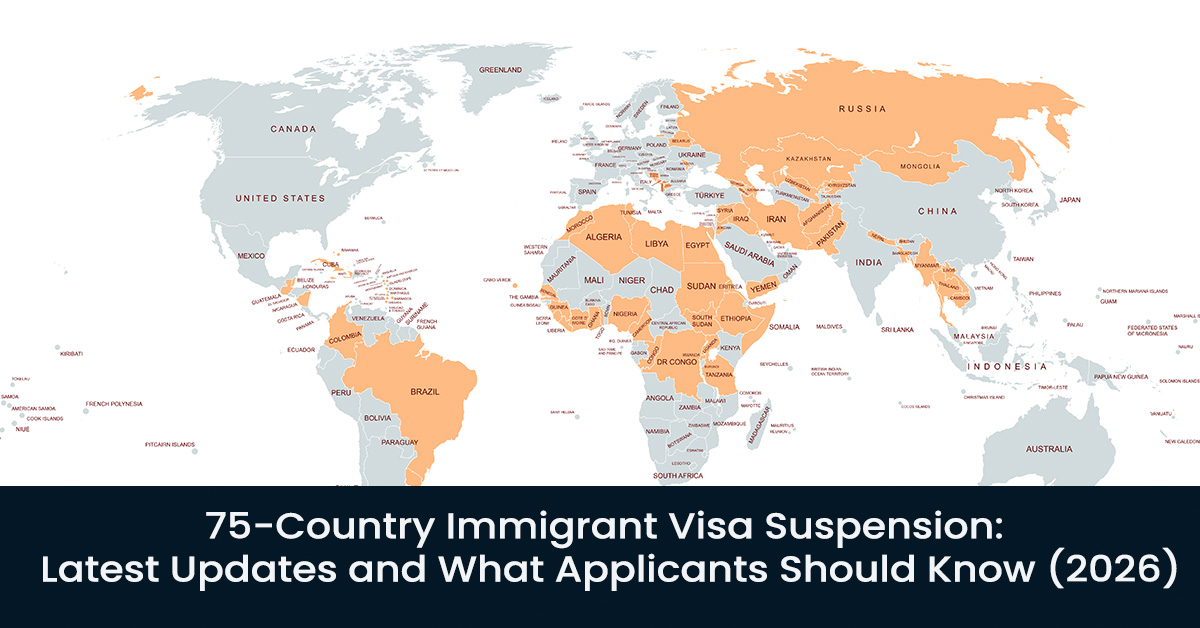
The Department of State has identified the following countries as subject to the immigrant visa issuance pause:
Afghanistan
Albania
Algeria
Antigua and Barbuda
Armenia
Azerbaijan
Bahamas
Bangladesh
Barbados
Belarus
Belize
Bhutan
Bosnia and Herzegovina
Brazil
Burma (Myanmar)
Cambodia
Cameroon
Cape Verde
Colombia
Côte d’Ivoire
Cuba
Democratic Republic of the Congo
Dominica
Egypt
Eritrea
Ethiopia
Fiji
The Gambia
Georgia
Ghana
Grenada
Guatemala
Guinea
Haiti
Iran
Iraq
Jamaica
Jordan
Kazakhstan
Kosovo
Kuwait
Kyrgyz Republic
Laos
Lebanon
Liberia
Libya
North Macedonia
Moldova
Mongolia
Montenegro
Morocco
Nepal
Nicaragua
Nigeria
Pakistan
Republic of the Congo
Russia
Rwanda
Saint Kitts and Nevis
Saint Lucia
Saint Vincent and the Grenadines
Senegal
Sierra Leone
Somalia
South Sudan
Sudan
Syria
Tanzania
Thailand
Togo
Tunisia
Uganda
Uruguay
Uzbekistan
Yemen
What This Means for EB-3 Applicants
For EB-3 unskilled and skilled workers, context matters.
The Earlier Stages Are Unaffected
The suspension does not affect:
- PERM Labor Certification (Department of Labor)
- I-140 Immigrant Petition (USCIS)
These stages are handled by agencies other than the State Department and continue to operate normally.
The impact is primarily at the final stage:
- Consular processing abroad, or
- Visa issuance after interview
EB-3 Is a Long-Term Process
The EB-3 process typically spans multiple years. Immigration policy headlines change far faster than EB-3 cases move.
Applicants who began EB-3 cases during:
- The 2017 travel ban
- The 2019 public charge rule
- COVID-era visa suspensions
Often, they ultimately received their green cards after policies were modified, narrowed, or lifted.
Historical Context: What We’ve Seen Before
Similar situations have occurred repeatedly:
- 2017 Travel Ban: Faced lawsuits, multiple revisions, and eventual modification
- 2019 Public Charge Rule: Blocked by courts and later withdrawn
- COVID-Era Visa Suspensions: Lifted as conditions changed
The pattern is consistent: major announcements create fear, legal challenges follow, and policies evolve.
What Applicants Should Do Now
Our general recommendations:
- Stay the course
If you are in the PERM or I-140 stage, continue normally. - Do not abandon your case
Inaction can be more damaging than delay. - Monitor official updates
Rely on travel.state.gov and reputable immigration sources. - Document everything
Keep copies of filings, receipts, and communications. - Avoid unnecessary international travel
Especially if you are from an affected country with a pending case. - Consult qualified professionals
Do not make fear-based decisions without proper guidance.
Conclusion
The reported 75-country immigrant visa suspension represents a processing pause, not a permanent ban to immigration.
While delays are frustrating and emotionally difficult, most cases remain legally active. Employment-based immigration, particularly EB-3, has historically proven more resilient during periods of political and policy uncertainty.
The U.S. economy continues to rely on foreign workers, and that underlying reality does not disappear with policy reviews.
We will continue monitoring developments and sharing verified updates as more information becomes available.
This article is provided for general informational purposes only and does not constitute legal advice. Immigration law is complex, fact-specific, and subject to change.